Efficiency in Evaluation: The Time-Saving Benefits of AI Quiz Generators for Teachers post thumbnail image

In the bustling world of education, where every minute counts, teachers face the perpetual challenge of balancing instructional time with assessment and evaluation. AI Quiz Generator is an innovative tool that is revolutionizing the way educators evaluate student learning. In this article, we’ll explore how AI quiz generators are transforming the evaluation process, saving teachers valuable time, and enhancing the overall efficiency of their teaching practices.

The Time Crunch in Education

Teaching is a demanding profession, and teachers often find themselves juggling multiple responsibilities within limited time frames. Evaluating student understanding and progress is a crucial aspect of teaching. Still, traditional assessment methods can be time-consuming and labor-intensive, leaving educators with less time for actual instruction and mentoring.

The AI Quiz Generators

AI quiz generators offer a solution to the time crunch faced by educators. These sophisticated tools leverage artificial intelligence algorithms to automate the quiz creation process, allowing teachers to generate assessments quickly and effortlessly. With just a few clicks, educators can create customized quizzes tailored to their specific learning objectives and student needs.

Customization and Flexibility

One of the key benefits of AI quiz generators is their flexibility and customization options. Educators can choose from a variety of question formats, including multiple choice, true/false, short answer, and essay questions, to create assessments that align with their teaching goals and pedagogical approach. Furthermore, AI quiz generators often offer a bank of pre-existing questions that teachers can draw from, further speeding up the quiz creation process.

Time-Saving Automation

Perhaps the most significant advantage of AI quiz generators is their ability to automate repetitive tasks associated with assessment creation. These tools can generate quizzes in a fraction of the time it would take for a teacher to do so manually, freeing up valuable hours that can be reinvested in lesson planning, student engagement activities, and personalized instruction.

Instant Feedback and Grading

AI quiz generators also streamline the grading process by providing instant feedback to students upon completion of the quiz. With automated grading features, educators can quickly assess student performance, identify areas of strength and weakness, and provide timely feedback to guide further learning. This real-time feedback loop enhances the learning experience for students and reduces the administrative burden on teachers.

Data-Driven Insights

Another advantage of AI quiz generators is their ability to generate data-driven insights into student performance and comprehension. These tools can analyze quiz results, track student progress over time, and identify patterns and trends in learning outcomes. Armed with this valuable data, educators can make informed decisions about instructional strategies, intervention plans, and curriculum adjustments to better support student learning.

In Conclusion

AI quiz generators are invaluable tools that are revolutionizing the way educators evaluate student learning. By automating the quiz creation and grading process, these tools save teachers valuable time, enhance efficiency, and empower educators to focus on what truly matters: inspiring and equipping the next generation of learners for success.


Related Post

Tips to Fix Slow Wifi Connection

Simple Tips to Fix Slow Wi-Fi ConnectionSimple Tips to Fix Slow Wi-Fi Connection

Internet becomes a vital thing these years, especially we are asked to work from home due to COVID-19. That’s said, having a fast Wi-Fi connection is essential to support our work productivity in our home. Installing a Sterke router will be a great help to make sure your internet connection is fast and stable. However, if you are using another Wi-Fi router and it’s problematic with the slow connection, you should fix it as soon as possible. In this article, I wrote five tips to fix a slow Wi-Fi connection.

Tips to Fix Slow Wifi Connection

Find the Best Spot, Coverage, and Antenna angle

Perhaps what’s going on with the home wireless network is the layout of the house and where the router sends the waves. To increase the range, experiment with the entire device as well as your antenna. This is the simplest method that does not require an excessive amount of time, money, or special understanding. It is worth changing the location of the router, if it is in a corner of the region, closet (especially metal – it greatly simplifies the signal, along with concrete walls). It may also be useful to reposition the router’s antenna – to learn more about it, search the Internet for the method of propagation of router signals. But back to sensitive signals, the vast majority of routers get the best signal when the antenna is still at full capacity.

Set Up a Good Channel

A Wi-Fi network operates on a series of narrow bands called radio rings. There are a few channels; there are multiple devices that want to use them. As a result, the most popular set – 2.4 GHz – can be blocked by local networks and other devices. This is perhaps similar to the way the navigation system selects the route with traffic. Routers do a great job here, but you can still help them. For example, you can set your router to automatically find and place the least obstructed channels.

Set Up to 5 GHz for Better Performance

Older versions of routers and more frugal brands don’t support 5 GHz, so we get significantly less noise and higher transmission speeds. Switching to Wi-Fi 5 may only be noticed if you have many devices in your home that need a robust wireless network. However, keep in mind that switching to 5 GHz is not a recipe for everyone. The price of a larger frequency is faster signal attenuation depending on distance, and in large apartments or homes, the burgeoning range may very well fail.

Use Wired System

Tips to Fix Slow Wifi ConnectionWe’re so used to the simplicity of a Wi-Fi program that we forget about that wonderful old cable. Connecting to the web via cable is often the easiest and least expensive option and eliminates the problems associated with Wi-Fi programs. Using a wired connection has two advantages. First, it eliminates remote problems where the wireless signal is not strong enough. Then, it improves the quality of the wireless connection of several devices when at least a handful of them are combined with a cable.

Set a Mesh System

The location of the wireless signal can also be increased in several ways. For example, signal amplifiers can be installed or the router’s antenna can be replaced with another (you’d be surprised how poor the antenna quality of a standard home router is, even though it looks impressive). However, if system device management isn’t your favorite thing to do, it’s best to buy a ready-made kit that allows you to set up a system. These kits are offered by the vast majority of network device manufacturers. With this method, the size of the area covered by the Wi-Fi process is up to you – you just have to pay extra, but you don’t need to invest in the best areas. Some manufacturers offer routers that support this option by default, after which you only need to buy a few low-cost access points.

From Data to Action: How QR Codes Streamline Information ProcessingFrom Data to Action: How QR Codes Streamline Information Processing

Technology continues to revolutionize the way we access, process, and utilize data. One such innovation that has taken center stage in recent years is the QR code. These square-shaped patterns may seem simple at first glance, but they are powerful tools that streamline information processing like never before.

From quick access to efficient data collection, inventory management to contactless transactions – QR codes have become an integral part of our daily lives. Let’s take a closer look at how these codes are transforming industries and empowering businesses to make data-driven decisions with speed and precision.

Quick Access to Information

Gone are the days of digging through piles of paperwork or scrolling endlessly through websites to find the information we need. QR codes offer a swift and hassle-free solution for quick access to data. This is usually true for codes that are generated by any new qr code generator. With a simple scan using our smartphones, we can instantly retrieve product details, event schedules, contact information, and much more.

Imagine you’re visiting a museum and come across an intriguing artifact. Instead of squinting at tiny labels or searching for a nearby guide, just whip out your phone, scan the QR code next to it, and voila! Detailed historical facts and fascinating stories about the artifact pop up on your screen within seconds.

But it’s not just in museums where QR codes excel at providing fast access to information. They have become ubiquitous in advertising campaigns, too. Whether it’s scanning a code on a billboard to learn more about an upcoming movie release or scanning one on packaging for nutritional info – these little black-and-white squares make accessing valuable data effortless.

Efficient Data Collection

Data collection is a vital process for businesses of all sizes. It provides valuable insights and helps in making informed decisions. However, traditional data collection methods can be time-consuming and prone to errors. This is where QR codes come into play, revolutionizing the way data is collected. With QR codes, collecting data becomes quick and easy. Instead of manually entering information or filling out lengthy forms, users simply scan the code with their smartphone cameras. This instantly captures the required data and eliminates the need for manual input.

Inventory and Asset Management

Keeping track of inventory levels, monitoring assets, and ensuring efficient utilization can be challenging tasks. However, QR codes offer a streamlined solution to these challenges. By incorporating QR codes into your inventory and asset management system, you can easily track and manage your products or resources. Each item can be assigned a unique code that contains all relevant information, such as product details, location within the warehouse, and even maintenance history. When it comes to tracking inventory levels, QR codes simplify the process by allowing for quick scanning with a smartphone or barcode scanner.

Contactless Transactions

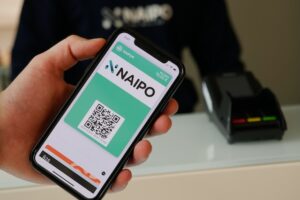
With contactless transactions, there’s no need to physically hand over money or touch any surfaces. Whether you’re buying groceries at the supermarket or paying for your morning coffee, simply scan the QR code displayed on the counter, and voila! The payment is processed seamlessly and securely. Not only do contactless transactions save time and effort, but they also prioritize safety by reducing physical interaction between customers and staff. This has become especially important in light of recent global events that have emphasized the importance of maintaining hygiene practices.

QR codes have revolutionized the way we process information, making it quicker and more efficient than ever before. With their ability to provide quick access to information, streamline data collection, enhance inventory management, facilitate contactless transactions, and so much more, QR codes are truly a game-changer.

smartphone

Important Aspects of Mobile App DevelopmentImportant Aspects of Mobile App Development

Mobile apps have become a vital part of our daily lives in today’s digital age. From ordering food to booking a taxi, we rely on these apps for various purposes. However, your app must stand out with millions of apps available on the app stores. This is where mobile app development comes into play: crafting an application that looks visually appealing, performs efficiently, and provides a great user experience. On the other hand, if you want to build apps without code, keep on reading. In this blog post, we will discuss some crucial aspects of mobile app development that can make or break your app’s success in the market.

User Experience

mobile

User experience (UX) is one of the most important aspects of mobile app development. It refers to how users interact with your app, including its design, usability, and functionality. A well-designed UX ensures that users can easily navigate through your app’s features without experiencing any glitches or frustration. To create a great user experience, you need to understand your target audience and their needs. You can identify pain points and design solutions by conducting research and analyzing user behavior patterns. This includes creating an intuitive user interface (UI), ensuring fast loading times, providing clear instructions on how to use the app’s features, and designing simple but effective navigation menus.

Security

Mobile app development is an exciting process, but it also comes with its own set of challenges. Security is a major aspect that developers must keep in mind during the development process. With the increasing number of cyber threats and data breaches, ensuring your mobile app is secure has become more important than ever. The first step towards securing your mobile app is to use strong encryption techniques to protect sensitive information from being accessed by unauthorized users. This includes encrypting user data such as login credentials, financial transactions, and other personal information. Another important aspect of security in mobile apps is implementing proper authentication measures to prevent unauthorized access. This can be achieved through two-factor authentication or biometric authentication like fingerprint scanning or facial recognition.

Easy Navigation

appEasy Navigation is a crucial aspect of mobile app development as it enhances user experience. A well-designed navigation system can help users easily find what they are looking for, making their interaction with the app seamless and effortless. To ensure easy navigation, developers need to consider various factors, such as the placement of menus, buttons, and icons. It’s important to avoid cluttering the interface with too many options that may confuse or overwhelm users. Instead, developers should aim for simplicity while providing all necessary features. Another key consideration for easy navigation is consistency. Users should be able to navigate through different sections of the app without relearning how to use it every time they open a new page or feature.

To sum up, mobile app development is a complex process that requires attention to detail and focus on several aspects. User experience is the most important of all, followed by security and easy navigation. A well-designed app can make or break a business and its reputation in the market. So if you are planning to develop your own app or hire a professional team of developers for it, ensure that these crucial aspects are given due consideration during every stage of development. Remember, creating an efficient and successful mobile application requires more than just coding skills – it needs creativity, insightfulness, and an understanding of user expectations.